 |
 |
21 June 2006
responses
In presenting work this week I am aware that I have left out some crucial information, as I am sure happens when writing this. If there are ommissions such as acknowledgeing authors of work I apologise here, and will endeavour to include them in future.
These should have been included in the last posting. Shelley Sacks Greenmuseum and David Haley Greenmuseum
Thinking in terms of spinning and combining fibres, using it as a metaphor for almost everything, has reinforced my understanding of environmental/ecological/social networks and structures. I am sure it not just a coincidence, everything does appear to have relationship and affect on everything else if you have time to research it. Working in the physical environment this becomes more and more obvious; people who work the land are sensitive to these relationships. Artists who listen to their insticts have the same sensitivities.

Making into thinking into more making
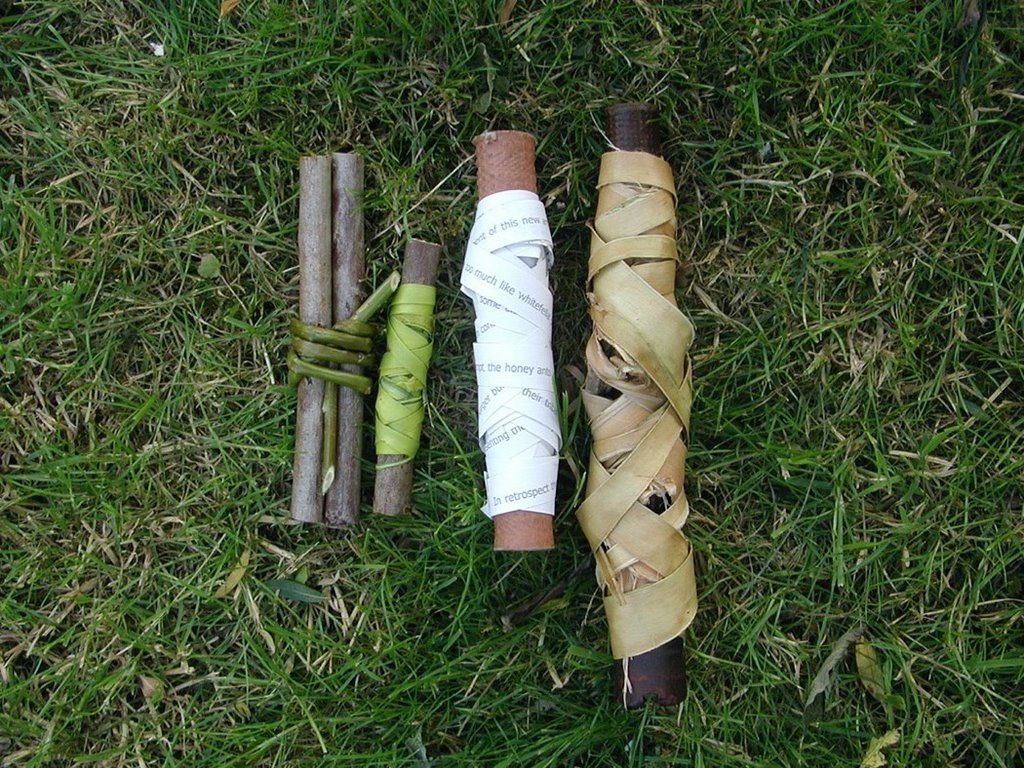
Manipulating, making and working through ideas always creates new thoughts and ideas. How do people who don't make find new ideas? I cannot imagine how this works without a physical process.
It is even more evident that children shold not be forced to do everything in 2 Dimensions - their learning should not be restricted to such a narrow thought processes.
The spiritual and instinctive elements of humans living with the world, with creation, with environment is far more creative than most adults have been conditioned to understand.
This quote 'A Personal statement of ecological arts practice' from David Haley
Ecology: the study of organisms in relation to one another and to their surroundings, derived from the Greek word, oikos, meaning house, or dwelling
Art: rt from an Indo-Aryan noun/adjective of the Rg Veda, meaning the dynamic process by which the whole cosmos continues to be created - virtuously
Eco-art ‘…the most moral act of all is the making of space for life to move onward’. – Robert Pirsig, Lila: an inquiry in to morals.
At the moment I cannot do better - but David's way of making lists and defining structures is a bit too male and clinical for me, I am more inclined to be in closer agreement with Shelley Sacks when she refers to 'soul-making' reather than David's 'moral' angleRedefining the ‘aesthetic’ as ‘enlivened being’ reveals the aesthetic as an ecological life process, and ‘art’ to be an expanded practice that includes non-material processes and relates to all spheres of activity. Such works are, therefore, as much to do with consciousness work, soul-making and personal transformative work as they are to do with social process and natural environmental concerns.
Combining willow and words - spinning a yarn
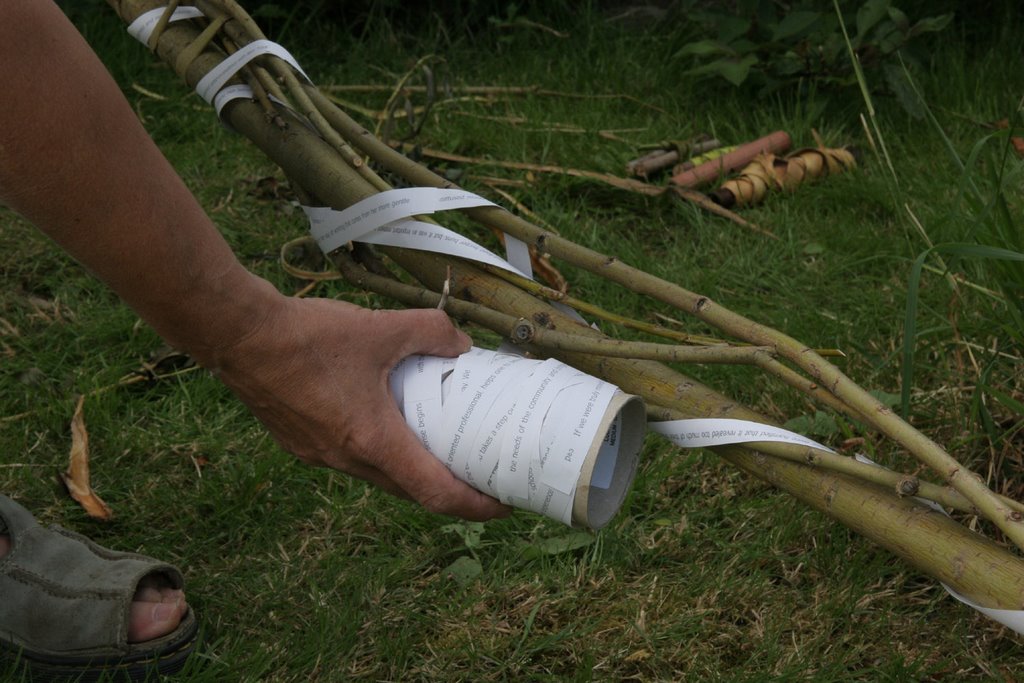
As always the plans and ideas I had for presenting work would take at least twice as long as the time I have allowed - how does that happen?
Wrapping my trees with the ribbon of words - which by the way is what I would like to have been able to make -I felt as if the trees were becoming an expression of the communities I have worked with. They are sensitive to and aware of environmental activity and know about the negative effects of agro-chemicalsand other pollutants, but always appear to be bound up in paperwork and 'the way it has to be done': the implication is that it is someone elses job to sort it out.
This action was very intense, in spite of doing it entirely alone - the photo was taken by Tim I could not have done this alone - but I had made and unmade the action several times before he arrived.
My ideas about joining comunities and relating the making to waterwways and river tributaries may not work in the physical, it will be intersting to see and hear readctions to this work, it will be going to several places over the summer.
I have not yet found the words I want to 'perform' but am looking out for some. I find these things arrive at the right time to be used.
20 June 2006
growing thoughts

Combining willow and words, thoughts bound inside and round the growing process.as I prepared the willow for cutting I began to think through all the time I have spent on the allotment working ropund the trees as they grow. I have been there in all weathers, watched birds and animals using them for shelter and found refuge myself when I needed to from intrusion or disturbance.
Climbing and manipulating the upper branches, finding out the flexible from the fragile - this is after all the salix fragilis - very appropriate to work with when thinking about my ecological footprint.
The smell of the willow hgas a calming effect on me, I know it contains salicitic acid - used in aspirin: but I have also been told it is used by homeopaths as a remedy for seperation anxiety and bereavement as well as resentments. I wonder how much I have absorbed while working with it, breathing in the atmosphere and through the skin it must have some effect.
The pace of work is different when working with natural and growing forms, I am sure it has a positive effect on me, it is impossible to force a tree to grow faster so what is the point of trying!
Perhaps I should be more conscious of the time frame of 'growing' ideas and producing words. The link between hand writing and thinking, as opposed to writing with a keyboard and being able to make infinite changes so fast that I cannot imagine must affect the way I am forced to think.
By the way I still like writing by hand, and do so in my 'sketch book' far more than drawing now. It feels like the same process at the moment, I never used to write anything!
19 June 2006
Spinning, winding and drawing
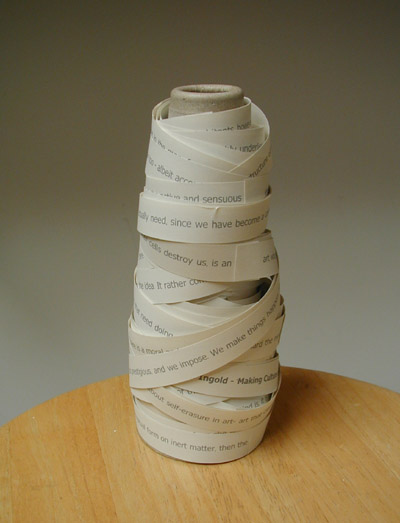
Today has been strange, working from very early morning on ideas and struggling a bit with making paper tape. It could still be a great idea that goes disastrously wrong!
I have now made the paper yarn...all sorts of double meanings to take from this! It looks ok, a bit uneven and if I had time would try and have it printed on ribbon. Winding it on to the cones was tedious & I began to doubt my sanity. In a similar way to hand spinning, it could be seen as completely unnecessary.
Now the task is to combine this with the tree - or part of the tree. I think I have been avoiding this, it feels like a very final decision. When the elements are put together it is commitment - but then I have no choice now, there is no time to make anything else. Perhaps that is why I use trees and sother slow processes, the final stage is delayed!
While putting the tape onto the cones I found myself reading the words in a different way - they seemed to take on different meaning because of how they were positioned. The juxtapositions with unconnected sentences was like positioning different fibres and colours.
18 June 2006
Trees, time and planning
Having taken the tree down this week-end I feel very strange - it went from being a great idea to being what could be a problem.
I had to think through how to transport the tree when cut down - always a bit of an anticlimax having to be practical!
In the end it is in 2 main parts, with other pieces available to use - I don't like the feeling the cut in half has given me - It is a bit like cutting the last 9 years of growing in half and making it worth less - I have not planned anything this long before and think perhaps ther is a way of doing it better.
I had intended to put something into the blog yesterday - but on looking at it again decided there were things I did not want to release yet - if at all. A good lesson in reviewing before publishing.
The next step in making this piece is to combine the tree with process of spinning - using words as well as actual spinning with drop spindle.
The growth habit of the tree is very like the fen rivers - somehow I wuld like to reference this as well, but as always trying to include too many oblique references.
Todays' real task is to wind strips of printed words onto bobbins or cones - depends which works best. images to follow
I had to think through how to transport the tree when cut down - always a bit of an anticlimax having to be practical!
In the end it is in 2 main parts, with other pieces available to use - I don't like the feeling the cut in half has given me - It is a bit like cutting the last 9 years of growing in half and making it worth less - I have not planned anything this long before and think perhaps ther is a way of doing it better.
I had intended to put something into the blog yesterday - but on looking at it again decided there were things I did not want to release yet - if at all. A good lesson in reviewing before publishing.
The next step in making this piece is to combine the tree with process of spinning - using words as well as actual spinning with drop spindle.
The growth habit of the tree is very like the fen rivers - somehow I wuld like to reference this as well, but as always trying to include too many oblique references.
Todays' real task is to wind strips of printed words onto bobbins or cones - depends which works best. images to follow
16 June 2006
allotment winter 2000

This image is of the allotment in winter 2000 when the willow was stll young and skeletal.
I liked the idea of putting an out of season image in - the temperature here is about 29 degrees.
I will put images of the tree I am cutting down today in later

Allotment and textile thoughts
Still learning about how to put in the information as I want it to appear - sorry to those who are used to blogging etc.
Please remember that all materials, writing and images put on to this Blog remain the copyright of Jane Frost. Remeber to ask appropriate permissions for reproducing, copying etc. I am a member of DACS - Design and Artists Copyright Society, any queries about copyright should go to them.
I have recently been having the experience of dreaming very specific and detailed dreams about work tasks and development ideas. I know one other person who has had this experience, it seems that in dreaming information that I was not aware knowing comes to the foreground and becomes a conscious activity. Perhaps this is the only way of finding this information - stress and preocupation must affect how I think.
Yesterday at Norwich Art School after having an idea (which had started after a dream) I drafted a piece of work with another student - images to come after the event! The conversation was as if I had dreamed the whole thing - it seemed to be in place already. There is potential - as always - for disaster, but on the other hand it could be really forceful.
I am taking a tree down today that I have been growing for about 8 years. It is a was part of my first attempts at using willows tpo work with when recovering from ME. I have been growing it like giant spun yarn, twisting it round each season but allwing it to take it's own form most of the time. I had not connected the fact that the allotment started around the same time as the thoughts about 'Living at the Edge' L@tE.
In the last few days news about L@tE and www.Lateexchange.com has started to snowball, we seem to be at the place we were aiming for - it has been hard work for the alst few years. Somehow taking the tree and making that a part of my work now has significance and feels the right time. I know, logically, it could happen next year, or even much further on; but emotion and instinct seems to be a strong element in the making process and I think is either intuitive or reflective practice - it certainly feels that way.
Working with the tree this morning in preparation to cut it down there have a lot of feelings and discoveries that I would not have become conscious of without manipulating the tree and other parts of the allotment. It is a place I associate with feeling stronger and fitter - my physical body is very involved with the action of working there & it is a very real studio space for me. I have recognised a relationship with my body and the developing wildlife; I am conscious of working alongside and sharing the space. there is an real element of negotiation in using the land. I have to get rid of some plants - weeds when they are in the wrong place & threaten to strangle or overwhelm the plants I want to work with. On the other hand I leave areas for wildlife to nest and shelter in where I don't really control the growth at all, in the winter I cut back and clear pathways. It is a way of defining the space, drawing a line round it, more than making it mine.
Reading Tim Ingold's work 'The perception of the environment' essays in livelihood, dwelling and skill has been like a confirmation of my work activity. I have not verbally analysed working on the allotment as a textile activity until recently, but have always known that is what it is - so taking the willow down and making it into a piece of spun yarn with text is a real conclusion. I have repeated myself I'm sure - sorry if you have read all this & wondered why. Sometimes repetition is like weaving - more of the same is not always unecessary! The opposite also applies, more words do not always mean better meaning or understanding....
Please remember that all materials, writing and images put on to this Blog remain the copyright of Jane Frost. Remeber to ask appropriate permissions for reproducing, copying etc. I am a member of DACS - Design and Artists Copyright Society, any queries about copyright should go to them.
I have recently been having the experience of dreaming very specific and detailed dreams about work tasks and development ideas. I know one other person who has had this experience, it seems that in dreaming information that I was not aware knowing comes to the foreground and becomes a conscious activity. Perhaps this is the only way of finding this information - stress and preocupation must affect how I think.
Yesterday at Norwich Art School after having an idea (which had started after a dream) I drafted a piece of work with another student - images to come after the event! The conversation was as if I had dreamed the whole thing - it seemed to be in place already. There is potential - as always - for disaster, but on the other hand it could be really forceful.
I am taking a tree down today that I have been growing for about 8 years. It is a was part of my first attempts at using willows tpo work with when recovering from ME. I have been growing it like giant spun yarn, twisting it round each season but allwing it to take it's own form most of the time. I had not connected the fact that the allotment started around the same time as the thoughts about 'Living at the Edge' L@tE.
In the last few days news about L@tE and www.Lateexchange.com has started to snowball, we seem to be at the place we were aiming for - it has been hard work for the alst few years. Somehow taking the tree and making that a part of my work now has significance and feels the right time. I know, logically, it could happen next year, or even much further on; but emotion and instinct seems to be a strong element in the making process and I think is either intuitive or reflective practice - it certainly feels that way.
Working with the tree this morning in preparation to cut it down there have a lot of feelings and discoveries that I would not have become conscious of without manipulating the tree and other parts of the allotment. It is a place I associate with feeling stronger and fitter - my physical body is very involved with the action of working there & it is a very real studio space for me. I have recognised a relationship with my body and the developing wildlife; I am conscious of working alongside and sharing the space. there is an real element of negotiation in using the land. I have to get rid of some plants - weeds when they are in the wrong place & threaten to strangle or overwhelm the plants I want to work with. On the other hand I leave areas for wildlife to nest and shelter in where I don't really control the growth at all, in the winter I cut back and clear pathways. It is a way of defining the space, drawing a line round it, more than making it mine.
Reading Tim Ingold's work 'The perception of the environment' essays in livelihood, dwelling and skill has been like a confirmation of my work activity. I have not verbally analysed working on the allotment as a textile activity until recently, but have always known that is what it is - so taking the willow down and making it into a piece of spun yarn with text is a real conclusion. I have repeated myself I'm sure - sorry if you have read all this & wondered why. Sometimes repetition is like weaving - more of the same is not always unecessary! The opposite also applies, more words do not always mean better meaning or understanding....
15 June 2006
Galerija Balen April 2006
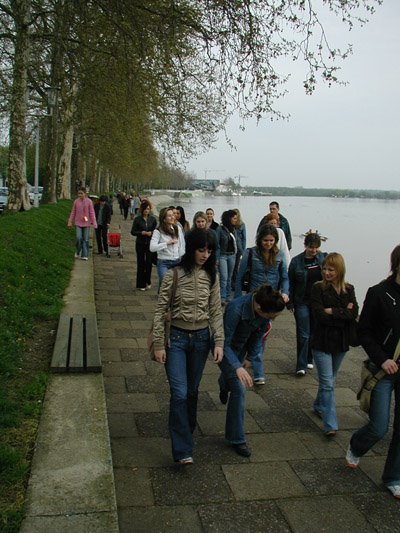 This may appear to be working backward or rather randomly, but I have been collating notes from the last 4 or 5 months as a lot of it relates to doing a piece of work about 'site body text'. This in turn has made me analyse how to express my reasons for starting work on L@tE
One of my recurring themes is to use my art as an expression of environment or 'place'. Reading John Inges book 'A Christian Theology of Place' has confirmed many of my own ideas about why we/society has become so disconnected from reality and able to ignore the effects of our existance on the other living beings that surround us.
The images here are from Slavonski Brod, Croatia in March/April where I worked as artist in residence and had an exhbition at Galerija Balen
The title of my exhbition was 'weaving a walk' and my aim was to explore the feeling of being at the edge of a country border which was a war zone only 10 years ago. I had not been aware of the effects on wildlife that war would have. Combining action of walking with
The workshops addressed this partly through and partly through encouraging participants to become conscious of their shared environment - both natural and man-made.
I had the experience of hearing my second nightingale of the year, this time in a bombed out and abandoned house. I managed to record about 2 minutes and when I discover whether it is possible I will include it here!
I was very encouraged by the response to this work. I felt a strong affinity with those who participated and who came to the exhibition. I deliberately did not have written explanation of the work; there was too much potential for mis-translations and misunderstandings in this context. This desicion was confirmed when several viewers of the exhbition expressed an emotional and empathetic response to 'such new and expressive work' For more information about the residency see translocal
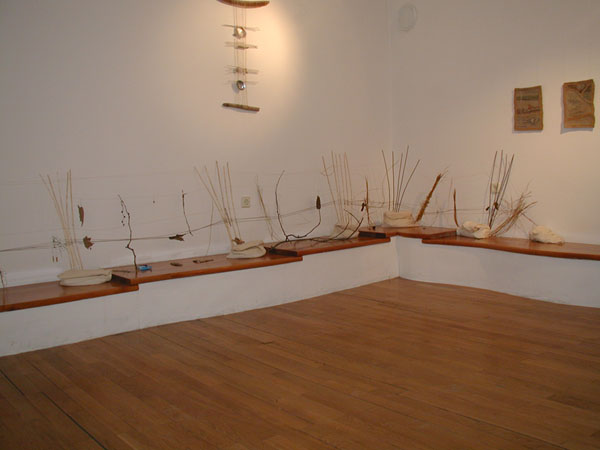 The gallery image shows finished work, some I brought from UK and some was constructed on site using local materials.
Most significant for me wqas the mud from the River Sava; I found it great material to draw with.
I filled small sandbags & constructed a narrow, fragile warp round the walls which was used by workshop participants to weave their finds into.
I was told that the fragility of the warp and materials ued spoke clearly of 'Fragile Earth'
I used the gallery space as studio, had time to sit, look and be still which became part of the work. It was a contemplative space and I used that.
It was the first time I have been very conscious of including time as an element in my work
Subscribe to:
Posts (Atom)